

AI can't see 90% of stores
Does it see your store?
Audit of your visibility in AI
Before we begin, a quick test. Take a look at the symptoms below. Do they sound familiar?
- SEO warning signals: Technical errors on the site, high rejection rates on landing pages, lack of updating keyword strategy.
- AEO Warning Signals: Zero featured snippets, no organized data (schema), your content does not answer specific customer questions.
- GEO Warning Signals: Your brand doesn't appear in AI summaries, no one quotes you, you don't publish any original data, and your blog content is generic content written by AI.
If you marked even a few of them, you have a problem. But we also have a remediation plan.
Pillar 1 - SEO
The foundation must be solid. You still can't ignore the basics. For e-commerce, it's absolute hygiene.
What you must have (Checklist):
- Link profile - is still crucial for authority. A strong inbound link profile from credible, industry-specific sources is still a fundamental signal to Google that builds the authority (E-E-A-T) of your store. In the era of AI Search, generative algorithms will rely on this historical authority to decide whether your content is credible enough to cite in AI responses.
- Content clusters - are your category pages (e.g., "running shoes") thematically linked to product pages and advice articles (e.g., "how to choose shoes for running on asphalt")?
- Technical SEO - page speed (Core Web Vitals), indexability, site maps. This is the basis for AI bots to want to talk to you at all.
- E-E-A-T (Expertise, Experience, Authoritativeness, Trust) - Can you see who the experts are on your site? Do you have author pages, extensive "About Us"?
Without solid SEO, your products won't even get into the race. Treat it as an entry ticket, not a guarantee of winning.
Pillar 2 - AEO
This is where the real game of AI begins. AEO (Answer Engine Optimization) is optimization not for keywords, but for the answers that AI engines and users (including those using voice search) are looking for.
What you must have (Checklist):
- Optimization for Voice Search - Customers are asking: "Where do I buy
[product]with delivery tomorrow?". Your website needs to answer this directly. - Implementation of FAQ Schema - Each category page and key product page should have a FAQ section implemented with a
FAQPageschema. These are ready-made "bites" for AI. - Structured Data (Structured Data) - This is absolutely critical for e-commerce. AI must understand your product without guesswork. Required minimum:
Product Schema(With price, availability, currency,aggregateRating),BreadcrumbList(for navigation),HowToSchema (for tutorials, such as "how to assemble our product"). - Question-based content - Stop writing about "features." Start answering "problems." Instead of "Our new 1200W blender," write "How to make the perfect smoothie in less than 60 seconds?".
AEO is technically "feeding" AI with data in the language it understands (Schema) and the content it needs (answers to questions).
Pillar 3 - GEO
This is the top of the pyramid. GEO (Generative Engine Optimization) is a strategy by which generative engines (like SGE) recognize you as an authority and primary source of information, quoting you in their responses.
What you must have (Checklist):
- Original research and data - It's a nuclear weapon in GEO. Instead of writing another generic article, publish "Analysis of 5000 customer opinions: What are Poles really looking for in coffee makers in 2025?". AI loves unique data and will cite it.
- Industry Recognition (Industry Recognition) - Are your speaking engagements at conferences? Do other industry sites cite your reports?
- Expert authors - No more anonymous content. Every advice article on your blog must have an author with a bio, photo, and links to his or her profiles (e.g., LinkedIn) that prove his or her expertise in the field.
- Multi-platform presence - Strong, consistent profiles on social media and other platforms build overall brand authority, which AI takes into account.
If you are using AI to mass-produce generic product descriptions or blog articles with no added value - stop. AI engines are trained to recognize and degrade such content. Your content must have a unique perspective, data or expertise.
Action Plan
From "Far Behind" to "Master of Visibilityi". Count your points to see where you are now. Go through the list below and award yourself 1 point for each item you have fully implemented, and 0 if it is missing:
SEO Checklist:
- You have a healthy, monitored backlink profile.
- You have strategically mapped content topic clusters.
- You have fully optimized technical SEO (speed, mobile, indexing).
- Have a clearly documented and updated keyword strategy.
AEO Checklist:
- Your content is optimized for voice search (Voice Search).
- You are starting to appear in AI Overviews (SGE) boxes.
- You have correctly implemented
FAQPageschema on key pages. - All key data (products, reviews, articles) are structured (Schema).
- You actively create content based on direct questions from customers.
GEO Checklist:
- You publish original research, reports or unique data.
- You gain recognition in the industry (media mentions, citations).
- AI (SGE) engines cite your brand as a source of information.
- Your content is signed by real expert authors with proven knowledge.
- You have built a strong, consistent presence on multiple platforms (social media, industry forums).
Add up your points (maximum 14). See where you land and what your immediate plan of action is:
(Score 0-5) - You are way behind
- Week 1: Technical audit (speed, links, meta).
- Week 2: Implementation of the basic
ProductSchema andFAQPageSchema on the top 10 category/product pages. - Week 3: Identify what customer questions AI is retrieving answers to from your competitors. Create a plan to answer these questions.
- Week 4: Fix content duplication errors. Optimize at least one key page for AEO/GEO.
(Score 6-9) - You have missed opportunities
- Your priority - immediately deploy advanced structured data across the site.
- Strategy - double your efforts where you already have strength (e.g., if you have a good link profile, use it to promote data-driven content).
- Test - expand FAQ sections and "How-to" guides
(Score 10-12) - You are a strong player
- Your priority - scaling. Optimize content that is underperforming.
- Strategy - Enter the programmatic addition of Schema (e.g., for FAQs).
- Build Authority (GEO) - Start creating original content (research, case studies, podcasts) and actively fight for citations).
(Score 13-14) - You are the master of visibility
- Your priority - maintaining the lead.
- Strategy - test new Schema types (e.g.
InteractiveSchema, summaries). Share unique data and case studies. - Strengthen leadership - build partnerships and invest in the authority of your experts
Summary
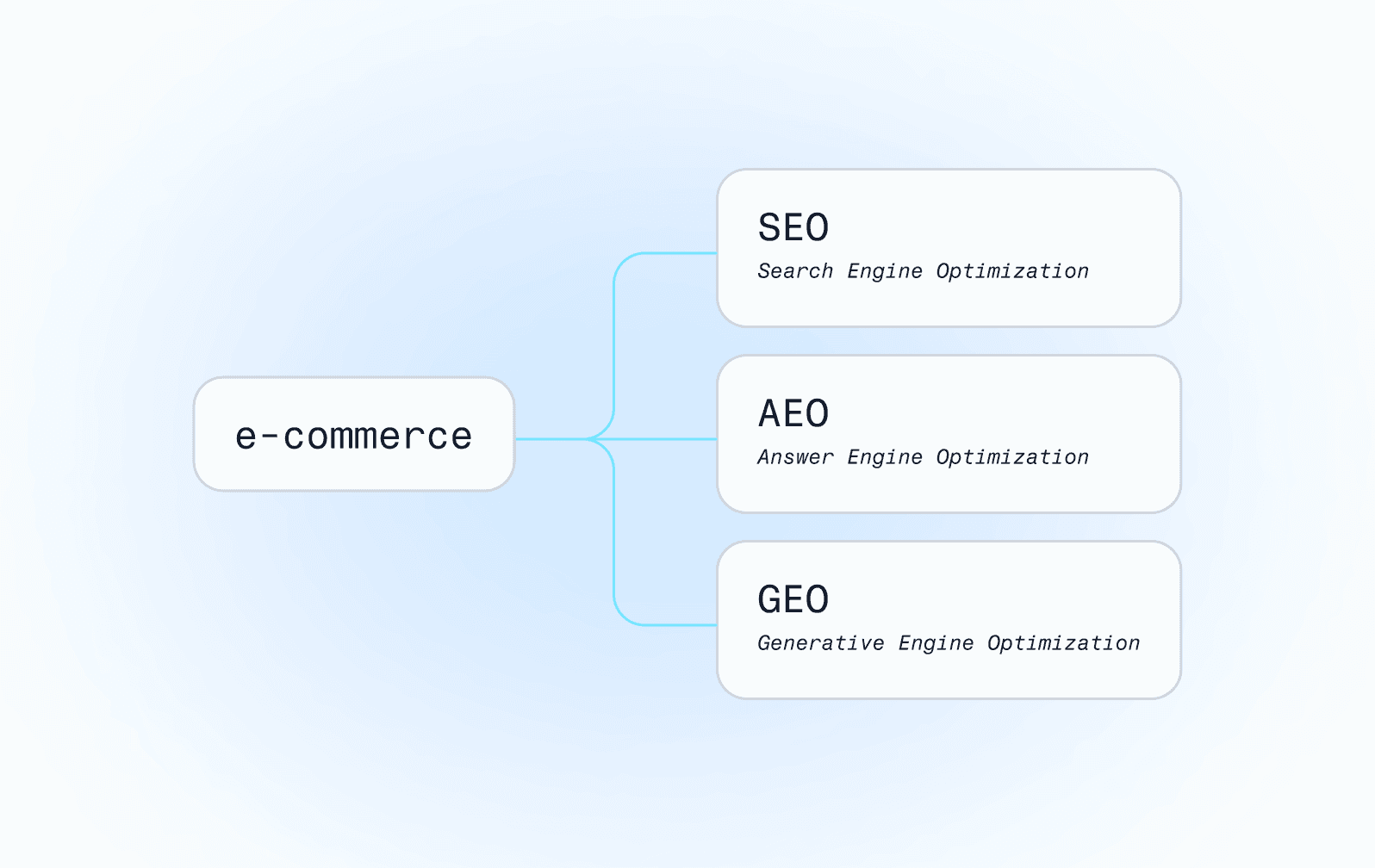
The AI Search landscape is complex and dynamic. It's no longer just about "being on Google." It's about being the foundation (SEO), the answer (AEO) and the authority (GEO).
Generic strategies don't work anymore. You need precise data, deep competitive analysis, and tools to stay ahead of the market. At Semly, we provide you with the solutions you need to make the right decisions - from identifying content gaps to monitoring competitor activity in AI Overviews to technical audits.
Share:
