

Check whether AI sees your business
Get a free audit
Updated on October 13, 2026.
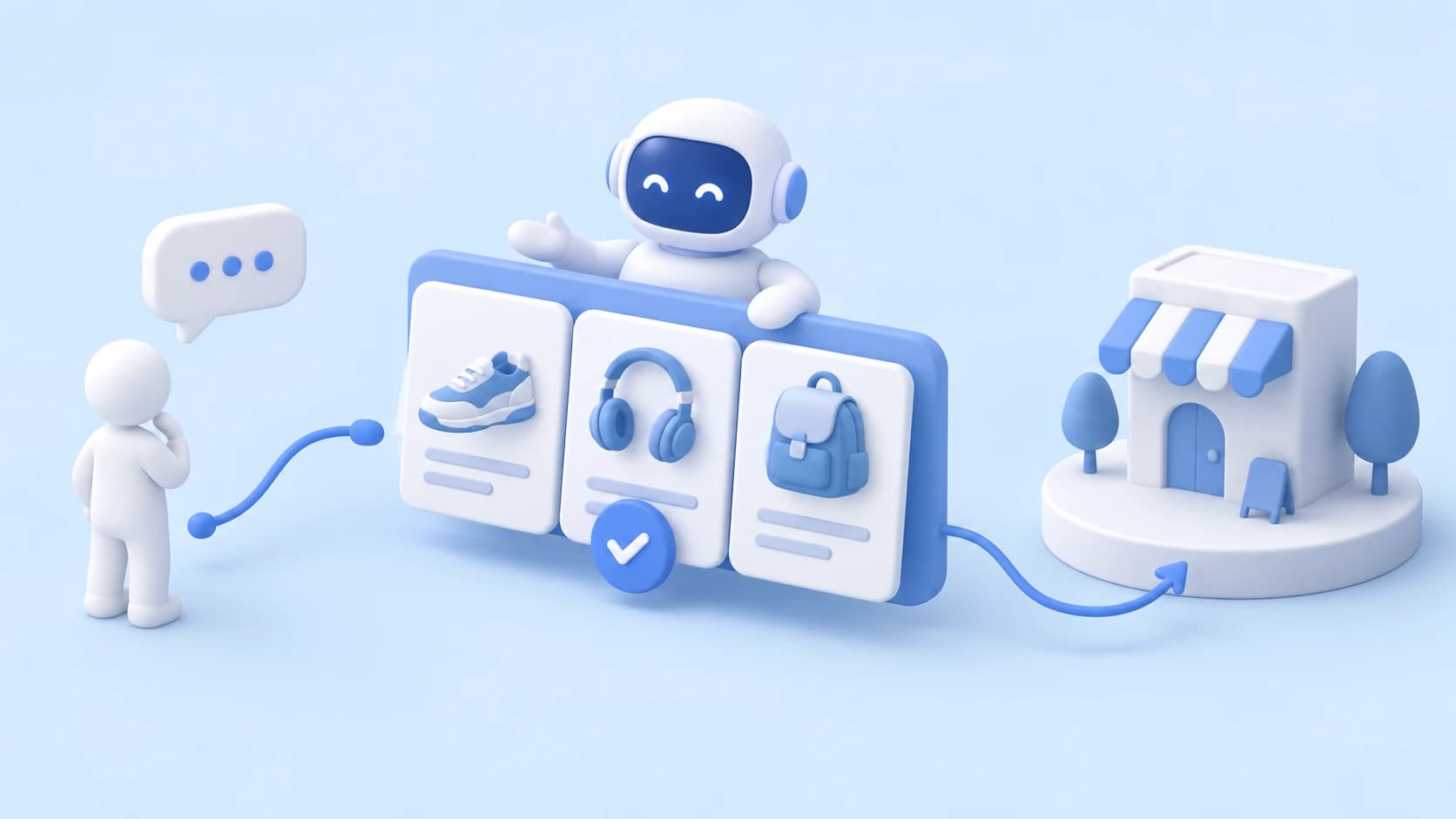
Yes, some customers already use tools such as ChatGPT, Gemini or Claude when making purchase decisions. That does not mean everyone has abandoned Google. An AI conversation can be one place where a customer creates a shortlist of offers.
For a business, the question is whether its brand is on that list when the customer describes a need. Looking only at website visits can miss this earlier selection stage.
What evidence supports AI-assisted shopping?
A 2026 announcement of research by Altavia Kamikaze + K2 says 20% of respondents knowingly use tools such as ChatGPT, Gemini or Claude in purchase decisions. The sample comprised 1,085 adult internet users in Poland.
Another 19% were unsure whether they had used AI. That does not confirm ChatGPT use or justify saying 39% of Poles buy through LLMs. We cite the press announcement, not the full report.
Source and sample description:Altavia Kamikaze + K2 - announcement published in AboutMarketing
| Study | Specific finding | What it shows |
|---|---|---|
| Altavia Kamikaze + K2, Poland, 2026 | 20% knowingly use such tools in purchase decisions. | Reported decision support, not a transaction share. |
| Capgemini, 12 countries, 2025 data | 25% used generative AI shopping tools. | 12,000 adults; Poland excluded. |
| Adobe, US, March 2026 | AI traffic converted 42% better than non-AI traffic. | Purchases observed after visits to analyzed retail sites. |
Table sources:Altavia Kamikaze + K2 - announcement
Capgemini Research Institute - What matters to today's consumer 2026
Adobe Digital Insights - report dated April 16, 2026
The 42% is a relative difference in conversion rates, not a rise of 42 percentage points. Non-AI traffic included various channels, not only organic Google. US data are not a conversion forecast for a Polish store.
These studies describe different things: reported tool use and behavior after an identified store visit. Together they justify attention to shopping in AI. They do not measure the same phenomenon and should not be averaged.
A customer may narrow the choice before the first visit
Imagine someone choosing headphones for working at home. Instead of opening several stores immediately, they describe their budget, household noise and frequent calls. Then they ask about comfort, microphones and differences between options.
This is an example explaining the process, not a real conversation transcript. The answer may create a product shortlist. The customer then visits an offer and checks availability and purchase terms.
| Customer question | What may change in the choice | Information to verify |
|---|---|---|
| Which headphones suit my work? | An initial shortlist forms. | Applications, comfort and limitations. |
| How do these two options differ? | Unsuitable solutions are removed. | Comparable specifications and included equipment. |
| Is paying more worthwhile? | Preferred model or budget changes. | Practical benefit, cost and conditions of use. |
| Where can I check the current offer? | A place for further verification is chosen. | Price, availability, delivery and returns. |
The table describes a possible journey. AI can get specifications, prices or terms wrong, so current seller information is still needed to assess a recommendation.
Help with comparison does not mean handing over the decision
In E-commerce in Poland 2026, Gemius reports that 71% of respondents do not want AI to make purchase decisions independently. The report combines survey data with Mediapanel and gemiusAdReal findings.
Source:Gemius - overview of E-commerce in Poland 2026
A customer can value a comparison and still want to choose personally. Stores should provide information for checking fit: full specifications, applications, limitations and purchase terms.
“Best quality” adds little to that conversation. It is more useful to explain when a product works well, when to choose another option and where to verify the current offer.
Does AI know the brand, or recommend it?
“What do you know about my business?” tests an answer about a named brand. It does not test whether AI independently selects it as a solution. That requires questions about a category and need without supplying your name.
Distinguish a mention, a source citation and a recommendation. A model can cite your guide but suggest another seller. It can also recommend a product without linking to its manufacturer's site.
Questions using only your own name reveal part of the picture. Check different customer needs and repeat answers in supported AI environments.
For a detailed diagnosis, see:Why a brand appears in Google but is not recommended by AI (Polish)
Why check this presence in Semly?
Semly monitors brand descriptions, competitors and answer sources in supported AI environments. It evaluates a selected set of questions; it does not track shoppers' private conversations.
Feature description:Semly - monitoring and analyzing AI sources
The free report provides an initial check of whether your business appears in analyzed answers and how it performs there. Next, investigate specific buying needs and the accuracy of your offer's description.
What to do if your business is missing
Do not start by mass-producing articles. Identify the missing information for a particular need. Comparing applications may require a category-page update; comparing variants may belong on a product page. Delivery terms have their place on the store website.
Record the change and check similar questions again. Observe brand presence, visits and transactions separately. None of these measures alone describes the whole customer journey.
More data on usage:How many customers use LLMs when shopping? (Polish)
Frequently asked questions
Do all customers now compare offers in ChatGPT? No. Studies show use by some respondents. Customers may combine AI, Google, stores and other sources.
Can AI help select a brand without visiting its site? Yes, an answer may also use external sources. That does not mean the information is current or correct.
Does a recommendation mean a purchase? No. It is part of choosing. Sales must be assessed separately.
Sources and data scope
Sources were checked on October 13, 2026. Polish, US and Capgemini data have different samples and definitions. The text contains no brand measurements or Semly customer results.
1.Altavia Kamikaze + K2 - research announcement
2.Capgemini - What matters to today's consumer 2026
3.Adobe - AI traffic and conversion
4.Gemius - E-commerce in Poland 2026
5.Semly - public feature descriptions
Share:
