

Check your company's visibility in AI
Free, no credit card required.
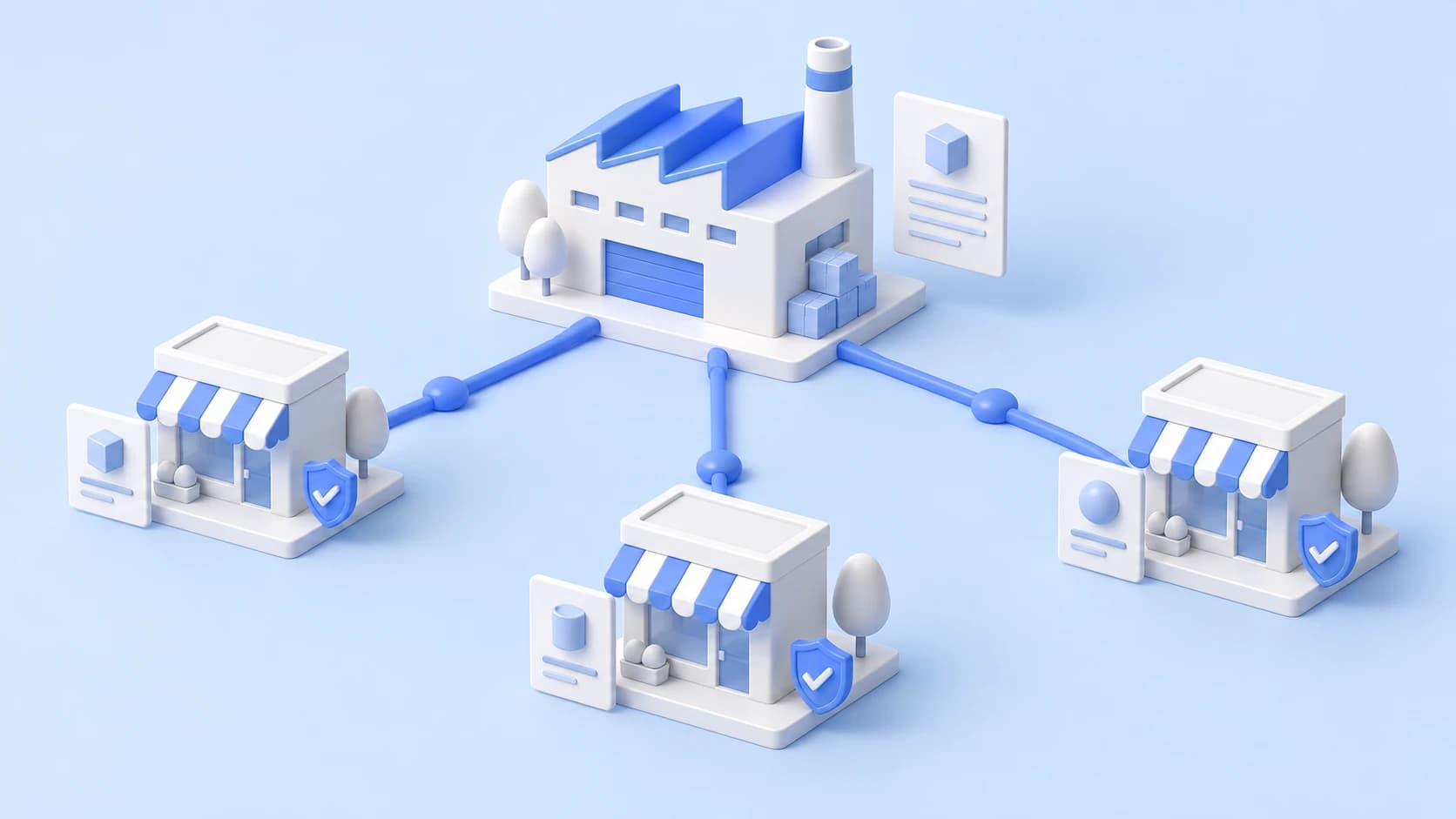
A customer finds the same model in three shops. One has stock, another is awaiting delivery, and the manufacturer supplies documentation. Combine those details into one answer and the customer may choose an offer that does not exist. This map helps you assign each fact to the right business.
One product brand, different responsible businesses
A product name may appear on the manufacturer's website, an importer's site and several shops. That does not make every business responsible for the same information. The manufacturer supplies specifications, documentation and its own declarations. Each seller confirms its own price, stock and transaction terms. Authorised partner status needs separate confirmation.
The distinction also appears in Schema.org: Product and Schema.org: Offer: manufacturer identifies the manufacturer, while seller, price and availability describe the offer. Name the manufacturer on the product page and attach shop information to its offer. These fields do not establish authorisation.
The practical GEO goal is specific: help readers identify who manufactures, who sells and who confirms the facts. Another general brand description is unnecessary. What is needed is a responsibility map for an existing product and the businesses offering it.
Assign an owner to each type of information
Start with one product and two sellers. For each claim, record the responsible business, source URL and verification date. Separate shared product information from details belonging to a particular offer. Shop A's price should not automatically become the manufacturer's price or Shop B's price.
| Information | Owner and evidence |
|---|---|
| Specifications and instructions | manufacturer documentation for the correct model. |
| Authorisation | current manufacturer confirmation or an official partner register. |
| Price and availability | one specific seller's offer. |
| Contact and transaction support | the business identified as the seller. |
This is a proposed editorial division that must fit actual agreements and responsibilities. It does not grant authorisation or replace document checks. Without confirmation, describe the business as a seller rather than adding partner status.
Show the relationship instead of copying everything
On the manufacturer's site, list genuinely confirmed partners with their business names, markets or cooperation scope and relevant links. On a seller's site, name the manufacturer and the seller's own role. Linking to manufacturer documentation lets readers check shared specifications without creating another uncontrolled specification set.
Hypothetical example: Company P manufactures device M1. Shop A sells it from its own stock, while Shop B takes orders fulfilled by a supplier. Both may sell M1, but availability and fulfilment differ. Only a partner with verified authorisation should describe itself as authorised.
A useful seller paragraph answers three questions: “What is our relationship with the manufacturer?”, “Which offer belongs to us?” and “Where can you verify product documentation?”. It does not need a promise that AI will always choose that page.
Keep relationships current
Assign responsibility for the partner list. When an agreement or cooperation scope changes, update information on both sides. A verification date describes the confirmation's freshness; an end date describes a changed relationship. Neither is the product launch date.
Across languages, preserve business and model identities. Translate the role description without adding local authorisation simply because another language page exists. A partner operating in one market does not automatically become a partner in every country.
Check whether AI distinguishes the roles
Test “Who manufactures M1?”, “Where can I buy M1 from an authorised seller?” and “Is Shop A's offer available?” separately. Record language, date, AI system, full answer and cited URLs. Evaluate whether information is attributed to the correct business, rather than just counting brand mentions.
Semly supports AI answer monitoring and cited-source analysis. Authorisation still needs checking with the manufacturer. More citations do not prove correct relationship recognition, and one accurate test does not establish a lasting effect.
What should implementation produce?
The result is a responsibility map: claim, information owner, verified URL, market and verification date. Begin with the relationship most often confused. If an AI answer assigns a shop's stock to the manufacturer, first correct that description and its source.
Check before implementation
- Specifications link to manufacturer evidence.
- Price and stock belong to a specific seller.
- Authorisation and market have current confirmation.
- AI questions check the correct business and source.
Related guide: How can you increase brand citations in ChatGPT, Gemini and Perplexity?
Share:
