Updated: 23 November 2026.
What should a buyer be able to decide on one page?
Start with visible information about the correct variant. Structured data and feeds need their own validation but cannot replace buyer-facing information. No universal set of fields guarantees recommendations across AI systems.
| Area | What to check and record |
|---|---|
| Specification and use | Connect a feature to a need and a limit. A fictional clamp fits 10–40 mm desktops: useful for clamp installation, unsuitable for a 50 mm top. |
| Variant matrix | For each variant, show its identifier, difference, price, availability and check date. One unavailable variant does not make the entire product family unavailable. |
| Who it is not for | Place verified limitations beside benefits. 'Indoor use only' should not disappear beneath a claim of universal suitability. |
| Compatibility | Name the model, generation and required adapter. Put the main exception beside the compatibility claim and link to the full verified matrix. |
| Replacement or original | Compare use, dimensions, connectors and documented limitations. Similar looks or the word 'equivalent' do not establish identical operation or warranty. |
| Pre-purchase FAQ | Answer real questions about contents, installation, delivery and use. Each answer must follow current terms or documentation for the actual variant. |
| AI copy review | Check every new specification and compatibility claim. Reject invented certifications, reviews, warranties and test results. A sample cannot establish accuracy of the entire batch. |
Hypothetical example
Fictional mount A fits 10–40 mm; B fits 20–60 mm. A buyer with a 50 mm desktop needs B if other conditions also match. Replace 'fits any desk' with the variant's range. If B is unavailable, do not transfer its specifications to A or imply that A's availability solves the problem.
Acceptance and the next measurement
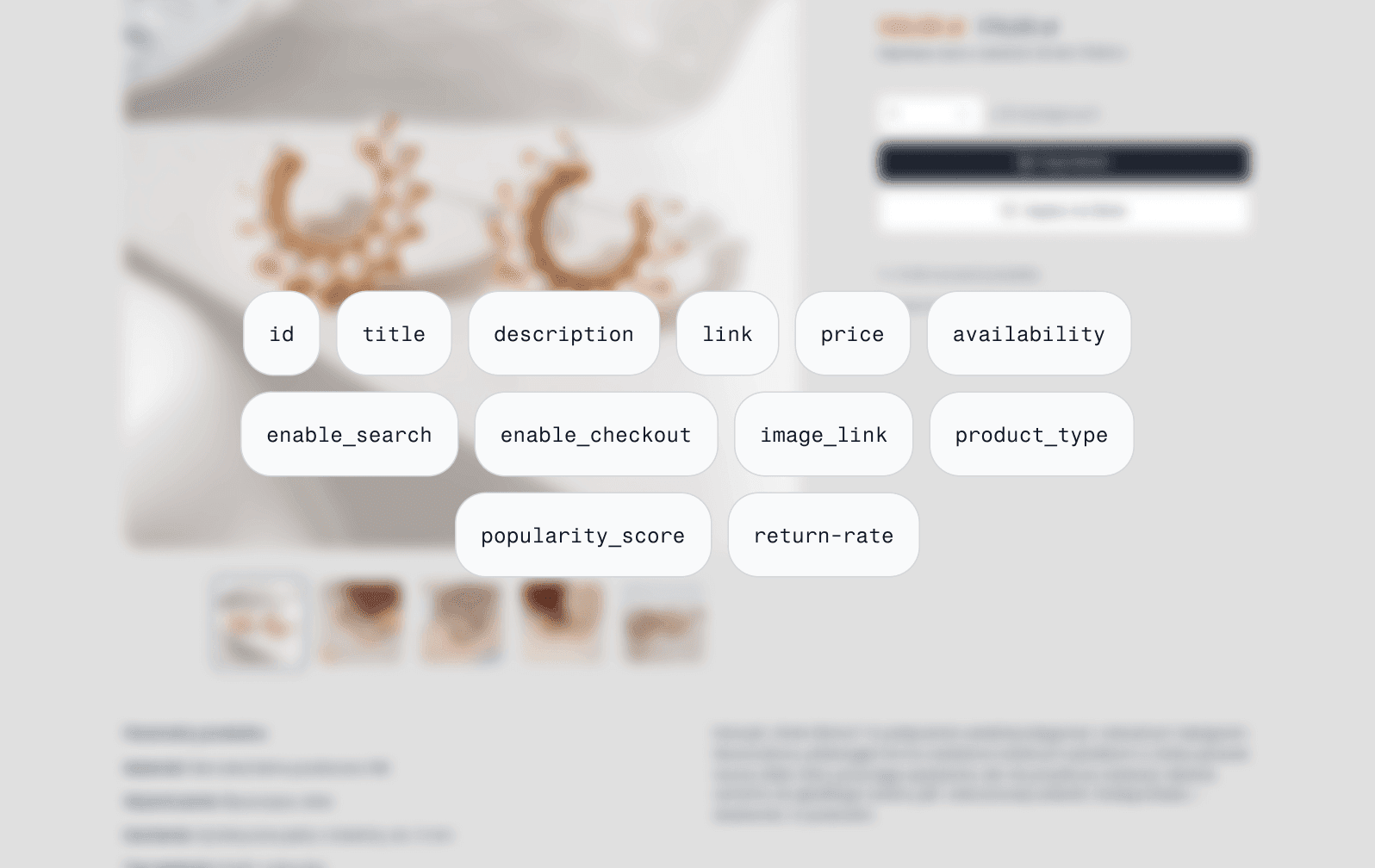
Open the public URL, select the variant and compare its name, price, availability and terms with the catalog. Visible information and integration data should describe the same offer. Check actual feed requirements in current integration documentation rather than copying arbitrary fields. Then observe the product, recommended seller and cited URL separately. A completed page is not proof of presence in AI answers.
Documentation and further reading